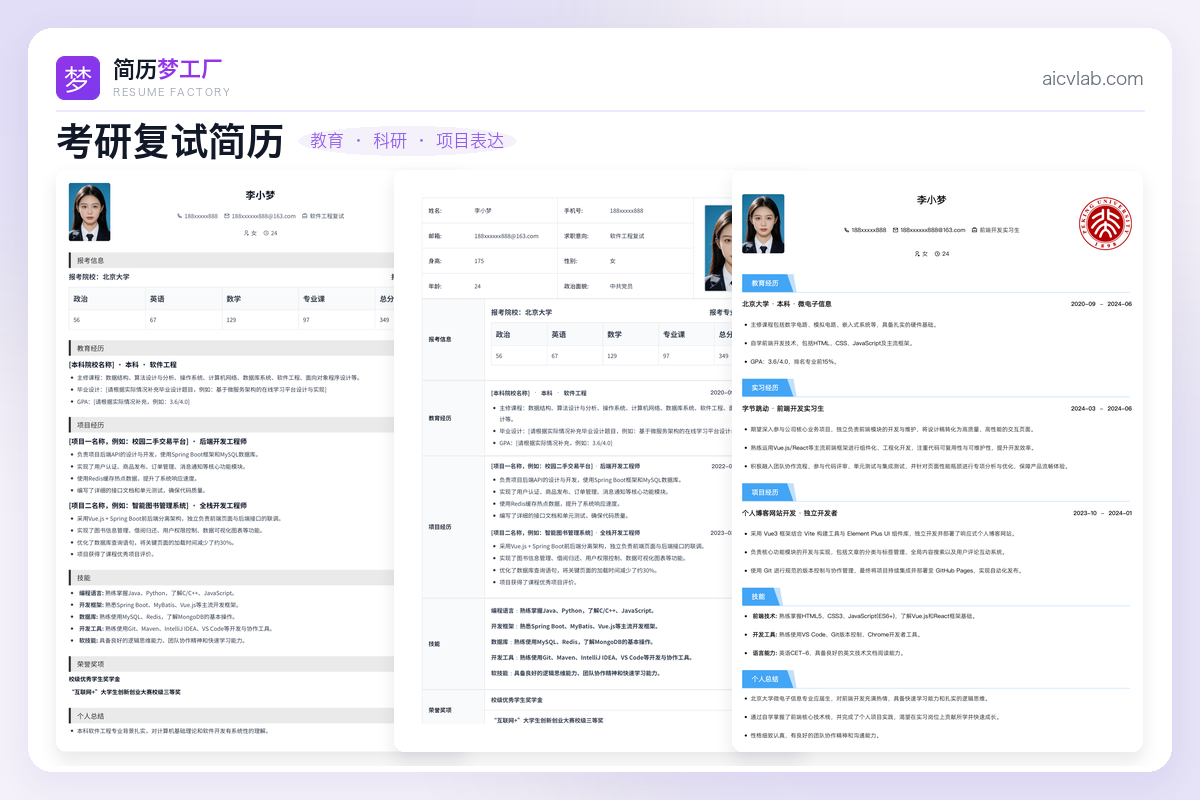
Postgraduate Retest Guide

How to Write a Postgraduate Retest Resume

From content selection and structure to defensible follow-up points, a systematic method for writing a graduate retest resume.

how to write a retest resumeretest resume writinggraduate retest resumeretest resume examples

Defensible Structure

Each experience can expand naturally, making it easy to dig deeper during the retest interview.

Stronger Evidence

Emphasize verifiable results to improve the credibility and persuasiveness of your resume.

Better Direction Match

Highlight research interests and a capability thread to strengthen the sense of fit with advisors.

In-Depth Methods

Content Selection Principles for a Retest Resume

Prioritize content that can support the retest Q&A. Professors usually probe details based on your resume, so every section should be something you can expand on clearly.

If the content is too mixed, keep the 2-3 strongest pieces of evidence around your target direction and move other experiences to secondary positions to keep the layout focused.

  • Include at least one project related to your research direction per page.
  • Keep only highly relevant core courses in your course list.
  • Remove generic activity descriptions weakly related to your target direction.

Pre-Application Check

Clear direction statement

Have you clearly stated your intended direction and interest theme in the resume?

Defensible experience

Can each project answer why you did it, how you did it, and what the result was?

Verifiable results

Do you include grades, rankings, experimental metrics, or competition results as objective evidence?

Professional, concise language

Do you avoid vague statements and use action and method words instead?

Case Studies (Before & After)

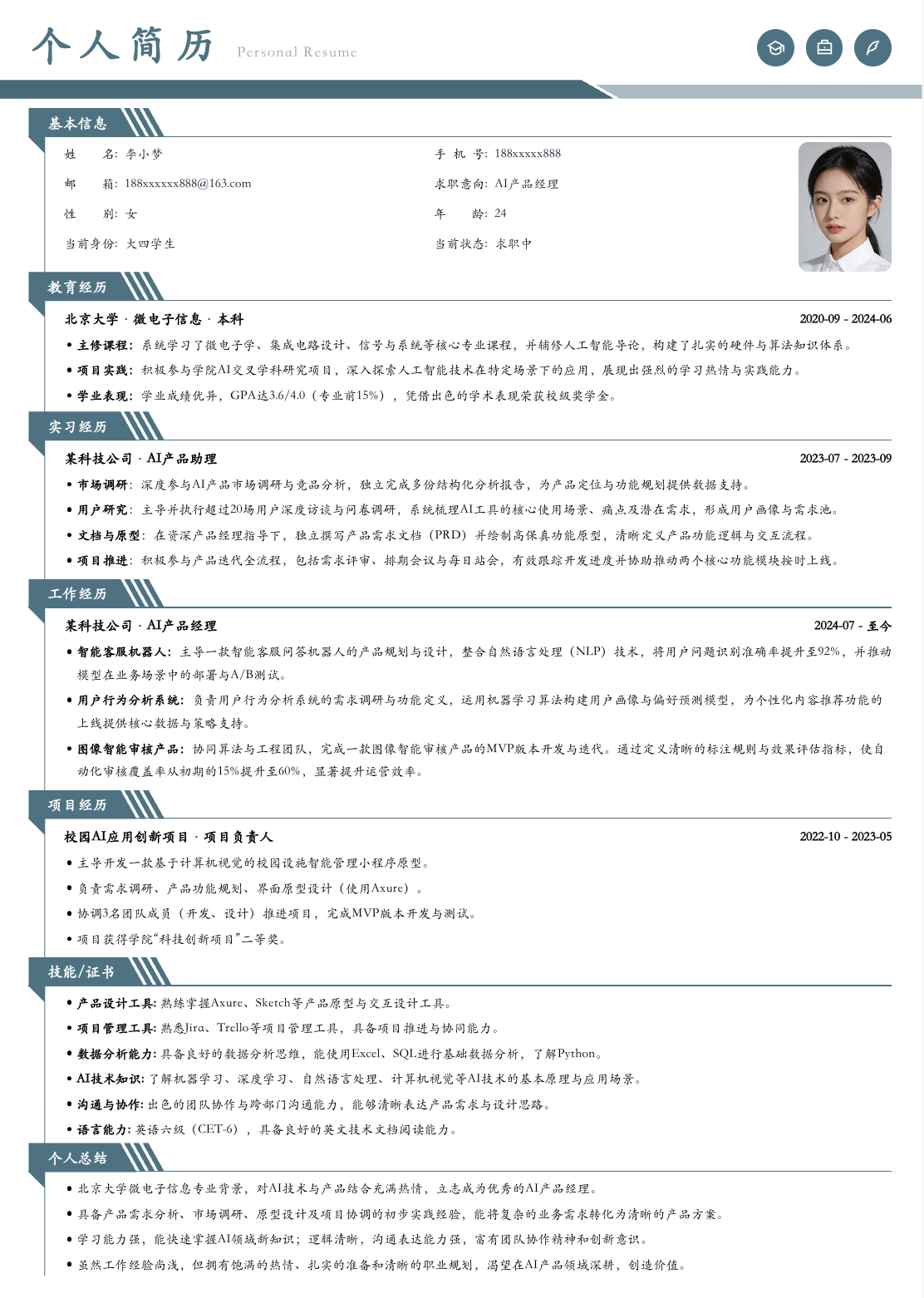
Electronics & Information Candidate

From "stacked experience" to a "research thread"

Before

Took part in multiple competitions and projects and gained a lot of experience.

After

Organized 2 core projects around a "signal processing and recognition" thread, adding the reasons for model selection, error analysis methods, and a final recognition accuracy improvement of 9.3%.

Outcome: Lets retest professors quickly judge your methodological ability and direction consistency.

Practical Tips

A retest resume is not about more information; it should organize evidence around whether you match the target direction. Weave your courses, projects, and research interests into a single, defensible thread.

Recommended Workflow

  • Set the direction thread first, then decide content selection.
  • Show at least one clear result metric for project experience.
  • Do a "retest follow-up rehearsal" after writing.

Common Pitfalls

  • Writing only what you did, not why and to what effect.
  • Too many scattered experiences with no clear direction.
  • Heavy jargon stacking makes it hard to see real ability.

FAQ

Should a retest resume include a self-evaluation?

You can write 1-2 sentences, but do not let it take up too much space; the focus is still evidence-based experience.

How do I make a cross-major application more persuasive?

Focus on transferable ability: filling in relevant courses, project practice, and methodological understanding.

Does a retest resume need to be bilingual?

Chinese is generally sufficient; prepare an English version as backup if your school requires it.

Quickly Generate a Resume by Retest Logic

Use a retest template to build the structure first, then use AI diagnosis and optimization to fill in evidence density, forming a high-quality resume that supports interviews and follow-up questions.

Related Links

How-To Steps

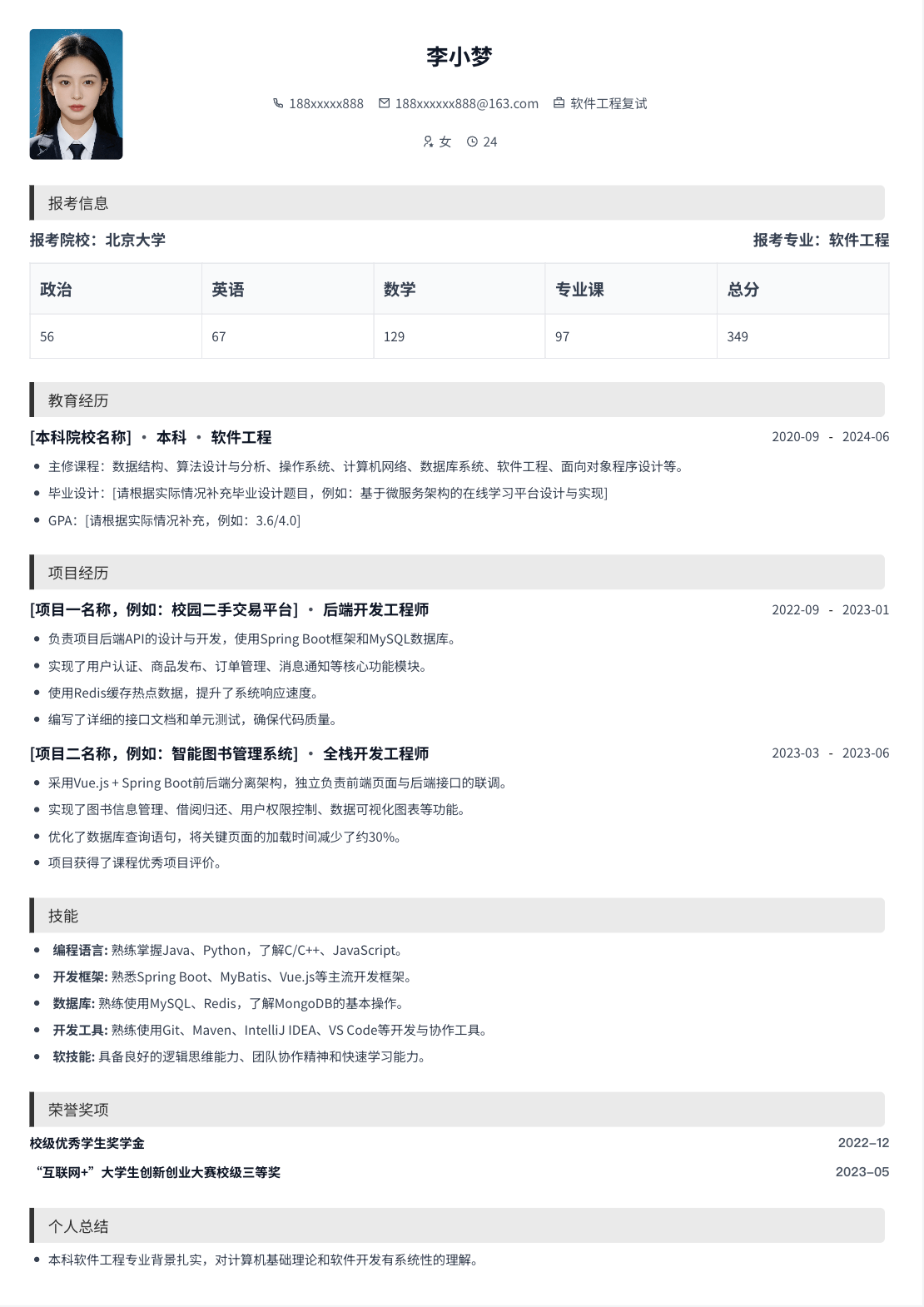
  1. Define the retest thread: Based on your target major direction, decide the one capability thread you want to be remembered for.
  2. Select core evidence: Pick the 2-3 experiences from courses, projects, and competitions that best support the thread.
  3. Rewrite project experience: Rewrite using a problem-method-result-reflection structure, highlighting your personal contribution.
  4. Fill in quantifiable info: Add grades, rankings, and metric changes as verifiable data to boost credibility.
  5. Simulate follow-up checks: Probe each experience from an advisor's perspective and fill in weak expressions in advance.

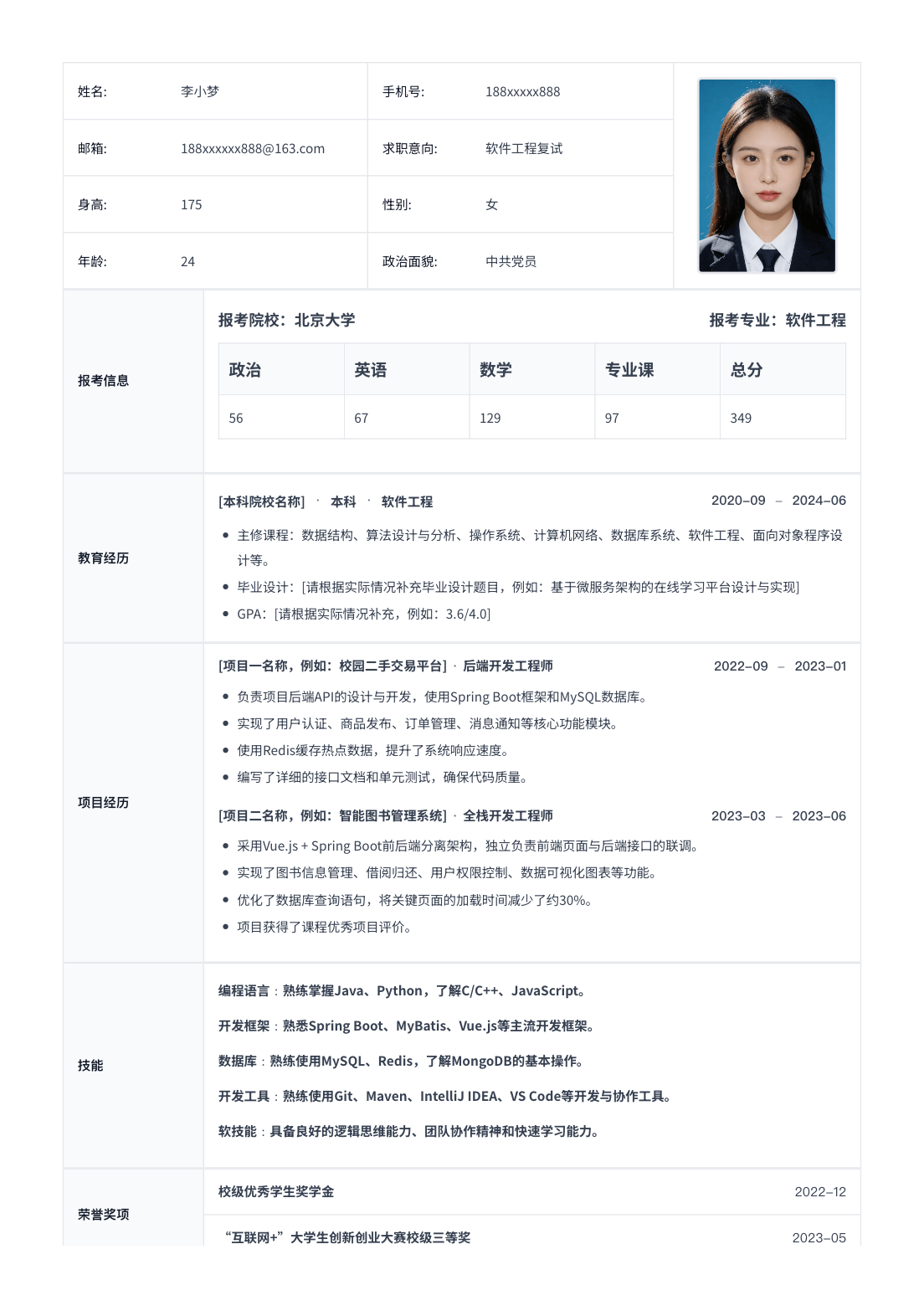
Popular Retest Templates

For retest scenarios, prioritizing templates that emphasize academic potential and project ability.

View all templates

References