AI Feature

AI Resume Optimization

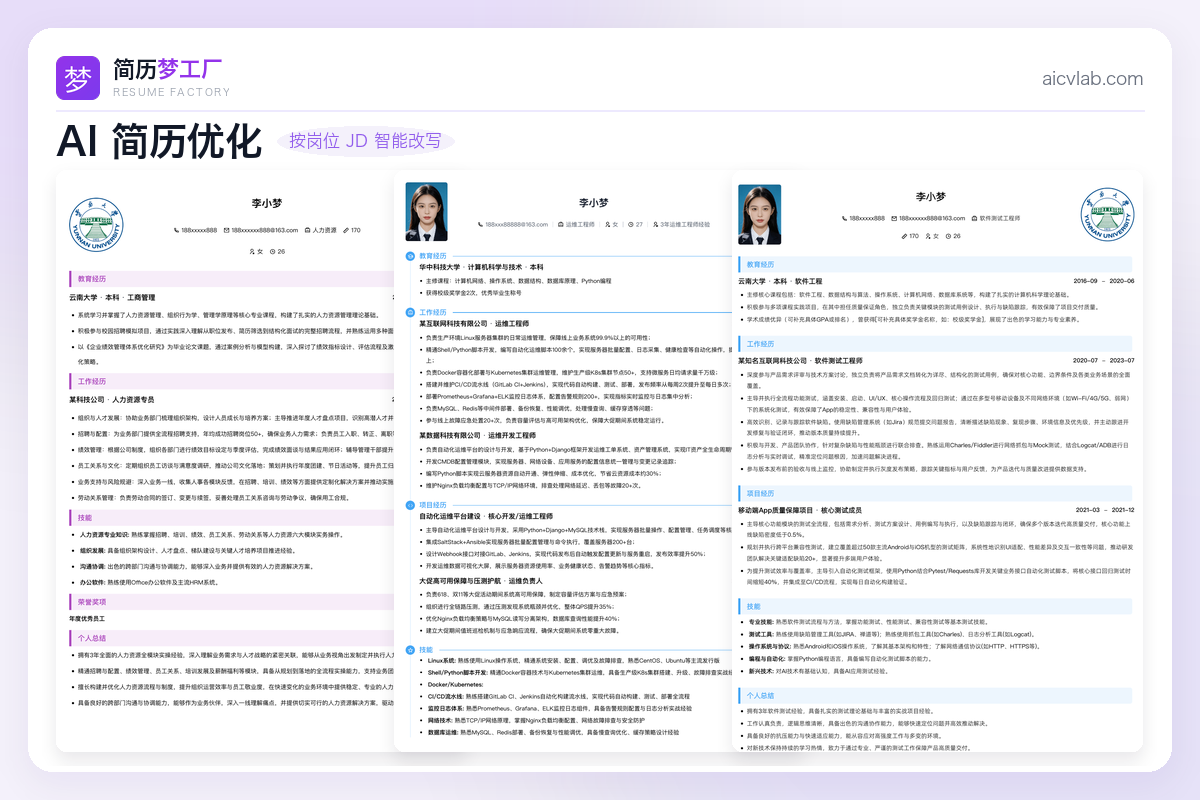
Automatically optimize resume wording based on the job description to improve keyword match, readability, and how results are presented.

AI resume optimizationresume optimization toolATS optimizationresume polishing

Smart Keyword Matching

Automatically identify key capabilities in the JD and map them to your experience.

Outcome Expression Boost

Upgrade responsibility-style descriptions into result-style ones for greater persuasiveness.

Semantic Consistency Fixes

Unify style and tone while reducing redundancy and information noise.

Industry Data Insights

Impact of Skills-First Hiring

Skills-first hiring markedly improves match efficiency

LinkedIn data shows that using skills as the core screening dimension meaningfully expands the matchable talent pool, so optimization should prioritize increasing skill-evidence density.

Source: LinkedIn Global Talent Trends

What Employers Look For

Nearly 90% focus on problem-solving

The NACE report suggests optimization should shift from responsibility statements to problem-solving evidence, the most direct way to raise the pass-through rate.

Source: NACE Job Outlook 2025

In-Depth Methods

An Efficient AI Optimization Workflow

Step one: lock in the target role and company, and extract the capability, business, and technical terms from the JD as optimization constraints.

Step two: tier your experience into high, medium, and low relevance. Polish outcome expression for high relevance, fill in keywords for medium relevance, and trim length for low relevance.

  • Optimize the top third of content first: it drives the first-read judgment.
  • Focus on one target role per optimization to avoid inconsistent style.
  • Do at least one human review after optimizing to ensure factual accuracy.

Pre-Optimization Preparation Checklist

Target JD is clear

Clarify the role level and scope first to avoid drifting optimization direction.

Original experience is complete

Keep factual detail so AI can do high-quality rewriting and outcome enhancement.

Result metrics are extractable

Prioritize filling in conversion, efficiency, cost, and quality metrics.

Consistent terminology and style

Unify Chinese/English terms, date formats, and tone of voice.

Case Studies (Before & After)

Operations Role

Before & after for product operations

Before

Responsible for campaign operations and content maintenance, supporting growth targets.

After

Designed and ran 3 acquisition campaigns and built a tiered operations strategy, lifting monthly new users by 31% and cutting cost per acquisition by 18%.

Outcome: Strengthening actions and results lets recruiters quickly judge business value.

Frontend Role

Before & after for a frontend project

Before

Responsible for page development and performance optimization, improving user experience.

After

Rebuilt the core page rendering pipeline and introduced resource preloading, cutting LCP from 3.4s to 2.1s and lifting page conversion by 9.7%.

Outcome: Upgraded from abstract statements to dual technical and business evidence.

Practical Tips

Optimization is not about rewriting everything; it is about making the same experience align better with how recruiters read. You need to balance accuracy with expressiveness.

Recommended Workflow

  • Import your original resume first, then paste the target JD for targeted optimization.
  • Prioritize optimizing the 3-5 most critical project or internship entries.
  • Run an AI diagnosis after optimizing to check structure and match score.

Common Pitfalls

  • Over-polishing distorts content and becomes hard to justify in interviews.
  • Only changing wording without adding result data limits the effect.
  • Ignoring differences between roles leads to keyword-match drift.

FAQ

Will AI optimization change my original meaning?

Optimize on the premise of your real experience, focusing on enhancing expression rather than fabricating content.

Do I need to optimize once for every role?

Do targeted optimization for high-priority roles; typically 2-3 versions are most effective.

Do I still need manual adjustments after optimization?

Yes. The final version should be fine-tuned to match how you actually speak in interviews.

Start Your Role-Targeted Optimization

Import your resume and use AI optimization, then use diagnosis to check the details and quickly improve application quality.

Related Links

Templates recommended after optimization

These templates are better suited to carry result-style expression and high-density capability information.

View all templates

References